
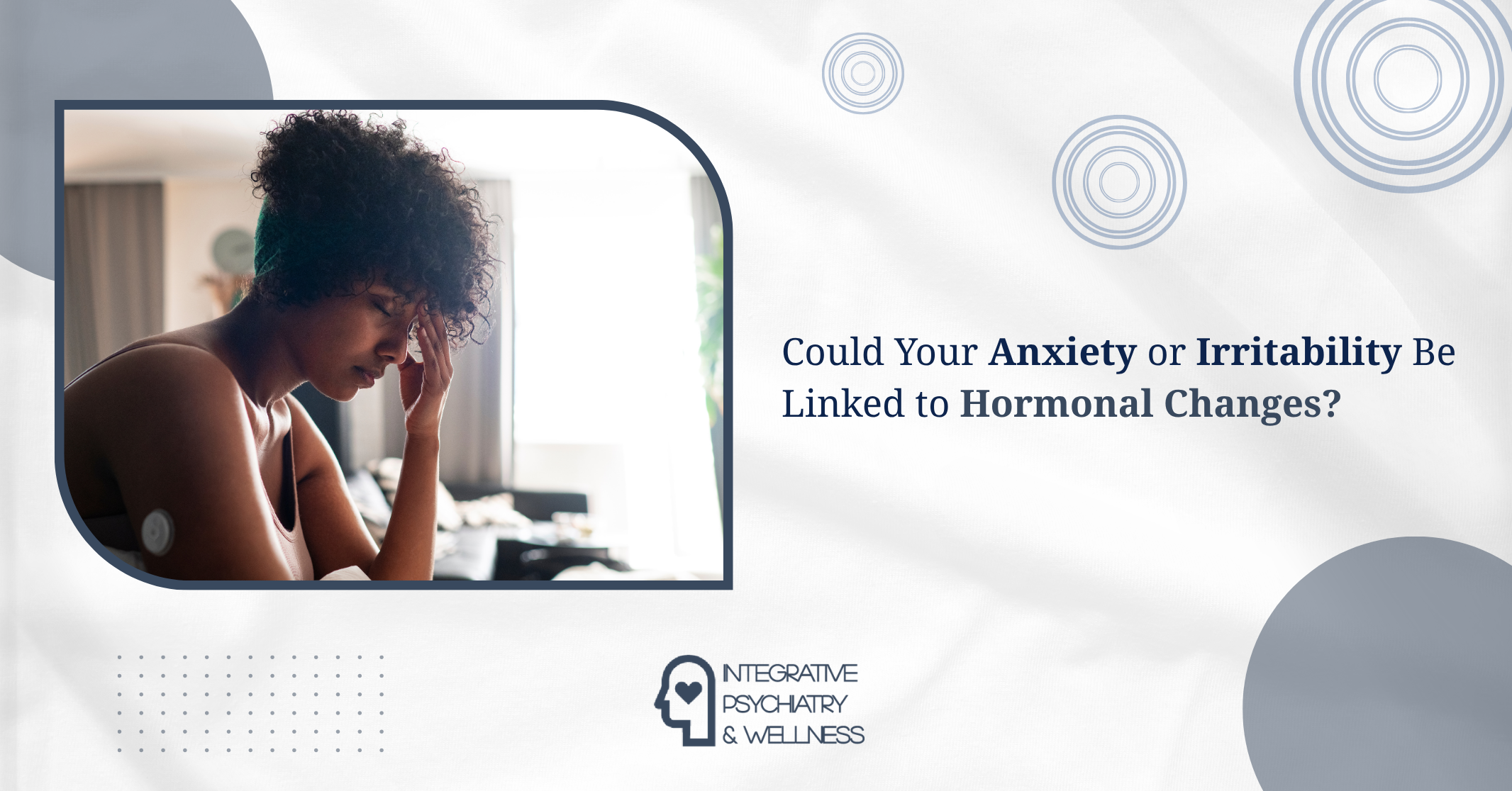
Have you ever felt anxious for no clear reason? Or maybe you have felt grumpy and snapped at people you love. You might think it is just stress. You might think it is just a bad day. But what if something else is going on? What if your feelings are linked to changes in your body’s hormones?
At Integrative Psychiatry & Wellness, we consider more than just symptoms and look at potential causes that can affect mental wellness, such as hormonal shifts, lifestyle and overall health.
Let’s look at whether your anxiety or irritability could be linked to hormonal changes.
What Are Hormones?
Hormones are like tiny messengers in your body. They travel through your blood. They tell different parts of your body what to do. They control many things. They control your growth. They control your sleep. They also control your mood.
When your hormones are balanced, you feel good. You feel calm. You feel happy. However, when your hormones alter, your emotions may alter too.
The Link between Hormones and Mood
Research has established a strong biological connection between hormones and emotional well-being. Studies show that changes in estrogen levels are linked to anxiety and irritability. Another study revealed that some genes associated with hormones are linked to menstrual cycle-induced anxiety and irritability.
This also indicates that if your hormones fluctuate, your mood can also fluctuate. It’s not all in your mind. It is real. It is biology.
Hormonal Changes in Women
Women have many changes in their lives. These changes can change their mood.
The Menstrual Cycle
During the menstrual cycle, hormone levels change every day. In the days before a period, many women feel more anxious. They may also feel more irritable. This is sometimes called PMS. But it is not just a small thing. For some women, these feelings are very strong.
Research shows that hormone sensitivity often shows up first as irritability and anxiety. This means that if you feel more anxious or grumpy at certain times of the month, your hormones might be the reason.
Pregnancy and After Baby
Pregnancy brings huge hormonal changes. These changes can trigger strong mood changes. Some women feel more anxious during pregnancy. Others feel more irritable.
After having a baby, hormone levels drop fast. This can cause emotions of anxiousness and anger.
For some women, these sentiments are slight. Some are quite powerful.
Research indicates that anger and irritability can be early warning indicators of a woman’s sensitivity to hormone fluctuations during and after pregnancy.
Perimenopause and Menopause
As women get older, their hormone levels change again. This period is called perimenopause. Estrogen levels will fluctuate unpredictably at this time. This might lead to anxiety and anger.
Estrogen levels remain low after menopause. It can also impact mood. This is a time when some ladies are more worried. Others feel sadder or more agitated.
Hormonal Changes in Men
Hormones affect men too. Testosterone is the main hormone in men. Lower testosterone levels may be linked to changes in:
- Mood
- Energy
- Motivation
- Emotional balance
Men can have lower testosterone as they get older. This is sometimes called andropause. During this time, men may feel more anxious. They may also feel more irritable.
Men are also affected by stress hormones. Cortisol may be called the stress hormone. When men are stressed, their cortisol goes up. This may cause anxiety and irritability.
Other Hormones That Affect Mood
Estrogen and testosterone are not the only hormones that affect mood. There are others too.
Thyroid Hormones
The thyroid gland produces hormones that help regulate metabolism, energy levels and many body functions.
When thyroid hormone levels are too high, some people may experience:
- Nervousness
- Anxiety
- Irritability
- Restlessness
When thyroid hormone levels are too low, symptoms may include:
- Low energy
- Feeling depressed
- Difficulty concentrating
Cortisol
Cortisol is your stress hormone.
In short bursts, cortisol is helpful. However, ongoing stress can lead to consistently higher cortisol levels.
Elevated stress hormones may contribute to:
- Anxiety
- Trouble sleeping
- Feeling overwhelmed
- Mood changes
Progesterone
Progesterone is sometimes called nature’s anti-anxiety hormone. It helps you feel calm.
But when progesterone drops, you can feel:
- More worried
- More grumpy
How to Know If Hormones Are Affecting Your Mood
Look for these signs:
- Your mood changes with your cycle. If you’re a female and you notice your mood falls a few days in advance of your period, it could be due to hormones.
- Your mood changes during pregnancy or after having a baby. Hormones may be to blame if you feel more anxious or irritable during these periods.
- Your mood changes as you get older. Hormones could be the cause if the mood change is due to a change during perimenopause or menopause.
- You do not know what is causing your change in mood. When you can’t figure out the source of your concern or irritability, it may be related to your hormones.
- You also have other symptoms. Hormonal changes are typically associated with additional symptoms. These can include trouble sleeping, low energy, or trouble focusing.
What You Can Do
If you think hormones are affecting your mood, you are not alone. There are things you can do:
Talk to a Professional
A qualified healthcare provider can help you explore possible causes of anxiety or mood changes. They may evaluate your symptoms, discuss your health history and recommend appropriate treatment options.
At Integrative Psychiatry & Wellness, we help the whole person. We offer:
- Medicine to help you feel stable
- Therapy to help you understand your feelings
- Help to balance your hormones
We have special doctors. We see patients in California, Oregon, Washington and Colorado. You can visit us from home on a video call. You can also visit us in Irvine, California.
Take Care of Your Body
Healthy habits can support hormone balance and emotional wellness. Consider:
- Eating nutritious foods
- Getting enough quality sleep
- Exercising regularly
- Staying connected with supportive people
Small lifestyle changes can have a meaningful impact on how you feel.
Manage Stress
Stress makes hormones go out of balance. Finding ways to relax can help. Try:
- Deep breathing exercises
- Meditation
- Spending time outdoors
- Practicing relaxation techniques
- Doing activities you enjoy
Be Kind to Yourself
Remember that hormonal changes are normal. They happen to everyone. If you feel anxious or irritable, do not blame yourself. It is not your fault. It is just your body doing what bodies do.
Final Thoughts
Anxiety and irritation can be difficult to manage. It can make you feel like you aren’t yourself.
But learning about hormones can help. It can help you understand why you feel this way. It can help you find the right help.
If you think hormones are affecting your mood, reach out. Talk to a professional. Get the support you need.
If you are struggling, Integrative Psychiatry & Wellness is here to help. We give personalized care that treats the whole you. Visit us to learn more or to make an appointment.
FAQs
Do men get worried from hormone changes too?
Yes. Men can get worried from hormone changes too. Testosterone goes down with age. This can lead to worry and crankiness. Men can also have thyroid problems that affect mood.
Should I talk to a doctor about hormonal anxiety?
Yes! You should talk to a doctor, especially if:
- Your worry is very strong
- It lasts a long time
- It affects your daily life
A doctor can help find the right treatment for you.



No comment