Medically reviewed by Shahrzad Shadmani, PMHNP-BC, FNP-C, founder of Integrative Psychiatry and Wellness (IPW Health).
Published September 16, 2026.
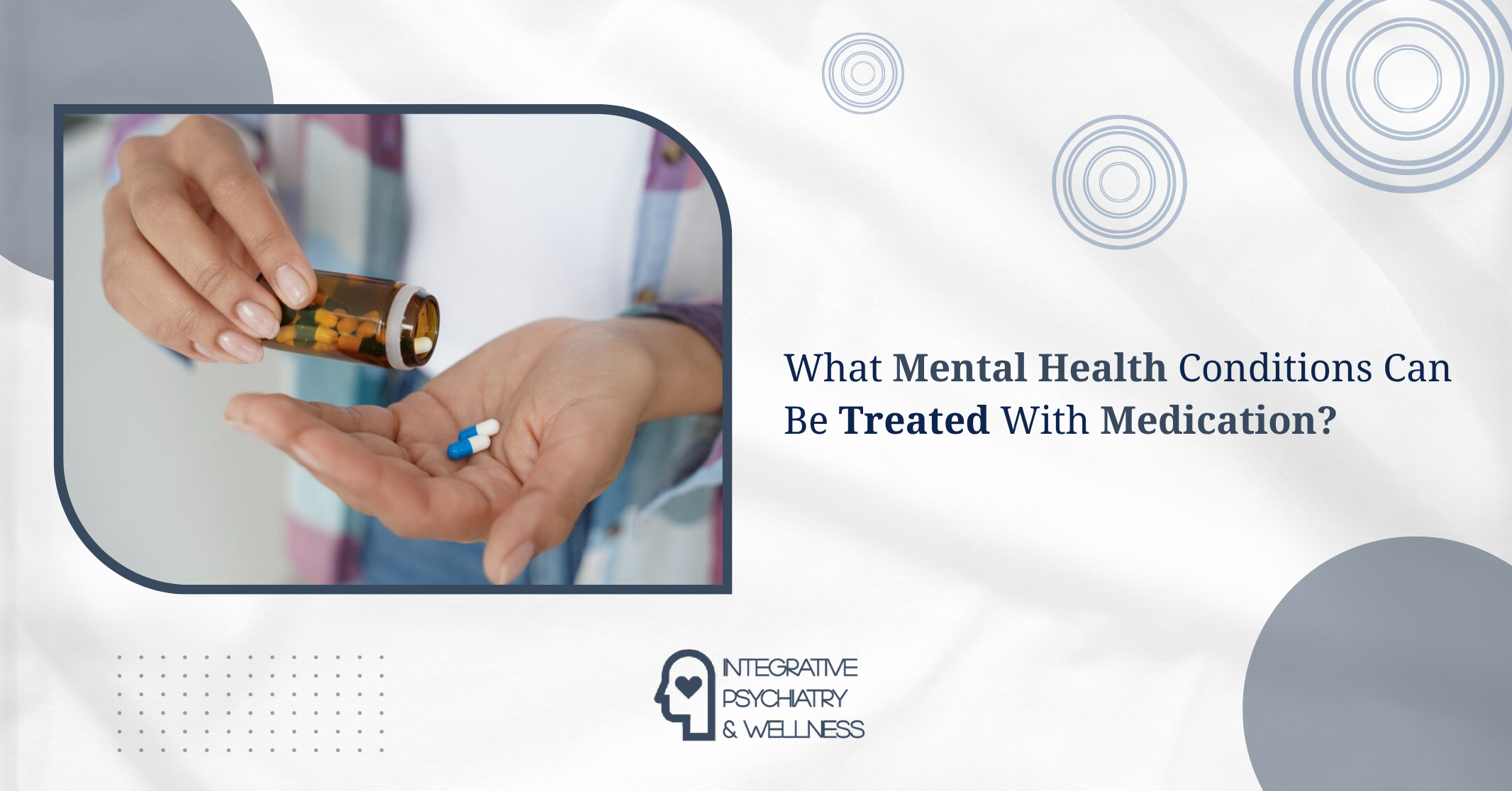
Most people arrive at this question from one of two directions. Either someone has suggested a medication and you want to know what it is actually supposed to do, or you have been managing something for long enough that you have started wondering whether medication is a reasonable thing to ask about.
Either way, the honest answer is more specific than “medication helps mental health.” It helps some conditions more than others, it is the leading treatment for some and a secondary option for others, and for at least one common condition the strongest evidence points at therapy first.
Here is what that actually looks like.
First: the explanation you were probably given is out of date
For decades, psychiatric medication was explained to patients as correcting a chemical imbalance — most often, low serotonin causing depression.
That story is a simplification the evidence does not support. Extensive research has failed to establish that depression is caused by a deficiency of serotonin, or that any single neurotransmitter shortage explains the common psychiatric conditions. The National Institute of Mental Health’s own patient materials no longer describe medication this way.
This is where people tend to jump to the wrong conclusion, so it is worth saying plainly: that does not mean the medications do not work. Antidepressants outperform placebo in clinical trials, and many people get real, durable relief from them. What has changed is our account of why. These medications measurably alter how neurotransmitter systems and brain circuits function; the path from that change to symptom relief is not settled, and anyone who tells you otherwise is ahead of the evidence.
Medicine is full of effective treatments whose mechanisms are incompletely understood. Uncertainty about mechanism is not the same as uncertainty about benefit.
Depression
Antidepressants — principally the SSRI and SNRI classes, with several other classes available — have a substantial evidence base in major depressive disorder.
Two things are worth knowing before you start. They do not work quickly: meaningful change typically takes several weeks, and the first weeks can be the hardest. And the first medication tried is not always the one that works; finding an effective option is often a process rather than a single decision.
For mild to moderate depression, major guidelines treat psychotherapy and medication as comparable first-line options, and the choice can reasonably follow your preference. For more severe depression, medication or the combination of medication and therapy is generally recommended.
Anxiety disorders
Generalized anxiety disorder, panic disorder and social anxiety disorder all respond to the same antidepressant classes used in depression — SSRIs and SNRIs are the first-line medication options across these conditions.
Cognitive behavioral therapy has an evidence base at least as strong, and for several anxiety disorders guidelines treat CBT and medication as co-equal first-line choices. Many people do best with both.
Benzodiazepines are a separate matter. They act quickly, which is precisely why their role is limited: tolerance, dependence and interference with the learning that makes exposure-based therapy work all argue against routine long-term use.
Obsessive-compulsive disorder
OCD responds to SSRIs, and to one older antidepressant that remains in use for this indication specifically.
Exposure and response prevention — a structured form of CBT — is first-line psychological treatment, and guidelines commonly recommend ERP alone or ERP combined with medication rather than medication alone. General supportive talk therapy is not a substitute for ERP.
PTSD
This is the condition most often misdescribed in patient-facing writing, so it gets the clearest statement.
Trauma-focused psychotherapy is the first-line treatment for PTSD. The VA/DoD Clinical Practice Guideline and the American Psychological Association’s PTSD guideline both place trauma-focused therapies — prolonged exposure, cognitive processing therapy, trauma-focused CBT, EMDR — ahead of medication when both are available.
Medication has a genuine role: SSRIs and SNRIs have the best evidence, two SSRIs carry FDA approval for PTSD, and medication is a reasonable choice when trauma-focused therapy is not accessible, not tolerable, or not what you want. Guidelines advise against benzodiazepines for PTSD. Sleep disturbance and nightmares are sometimes addressed separately.
Bipolar disorder
Medication is foundational here in a way it is not for anxiety or PTSD. Mood stabilizers and certain antipsychotic medications are the mainstay of treatment, used both to manage episodes and to reduce the risk of future ones.
What can honestly be said is this: for many people, medication reduces how often episodes occur and how severe they are. Response varies considerably between individuals, and relapse can happen despite consistent treatment. Some mood stabilizers require ongoing blood monitoring as a condition of safe use — that requirement is part of the treatment, not an optional extra.
Psychoeducation, regular sleep and structured psychotherapy have guideline support alongside medication.
ADHD
Stimulant medications have the largest effect of any pharmacological treatment in psychiatry, and non-stimulant options exist for people who cannot take or do not tolerate stimulants.
What they do is improve attention regulation and reduce impulsivity and distractibility for a majority of people with ADHD. Benefit is usually partial rather than complete. They do not produce sustained single-task focus on demand, and they do not replace skills, structure or accommodations.
Stimulants are controlled substances, which affects how they are prescribed and monitored.
Schizophrenia and other psychotic disorders
Antipsychotic medication is the core treatment, with strong evidence for reducing symptoms and lowering relapse risk. Psychosocial treatments — family intervention, supported employment, CBT for psychosis — are recommended alongside medication rather than instead of it. These medications require monitoring for both movement and metabolic effects.
What medication is not for
Two things are commonly listed as targets for psychiatric medication that do not belong there: sleep problems and brain fog.
Cognitive complaints — trouble concentrating, word-finding difficulty, a persistent sense of mental slowness — are a symptom, not a diagnosis, and often improve when the underlying condition is treated. They can also be caused by thyroid disease, anemia, sleep apnea, medication side effects and other medical problems, which is why persistent cognitive symptoms warrant medical evaluation rather than a prescription.
Chronic insomnia has its own first-line treatment, and it is not a sedative: it is cognitive behavioral therapy for insomnia (CBT-I).
How this gets decided
Not from a page like this one. A psychiatric evaluation looks at what you are experiencing, how long it has lasted, your medical history, other medications, substance use, family history, and what you have already tried. That is what determines whether medication is appropriate, which class, and whether therapy should come first, alongside, or instead.
Nothing here is a reason to start or stop anything. If you are already taking a psychiatric medication, do not change it based on an article — including this one.
IPW Health provides psychiatric evaluation and medication management by telehealth in California, Oregon, Washington and Colorado, and in person in Mission Viejo, California. Our therapy team delivers CBT, exposure and response prevention for OCD, and EMDR and trauma-focused therapy in house, and we conduct adult ADHD evaluations and order and interpret laboratory work directly.
This article is general education, not medical advice, and reading it does not create a patient–provider relationship. Treatment decisions depend on your history and should be made with a clinician who knows it.
If you are in crisis or having thoughts of harming yourself, call or text 988 to reach the Suicide and Crisis Lifeline, available 24 hours a day in the United States. If you are in immediate danger, call 911.
Sources
- National Institute of Mental Health. Mental Health Medications; Anxiety Disorders; Obsessive-Compulsive Disorder; Attention-Deficit/Hyperactivity Disorder; Bipolar Disorder; Depression.
- American Psychiatric Association. Diagnostic and Statistical Manual of Mental Disorders, Fifth Edition, Text Revision (DSM-5-TR).
- American Psychiatric Association. Practice Guidelines for the Treatment of Patients with Major Depressive Disorder; with Bipolar Disorder; with Schizophrenia.
- U.S. Department of Veterans Affairs / Department of Defense. Clinical Practice Guideline for the Management of Posttraumatic Stress Disorder and Acute Stress Disorder.
- American Psychological Association. Clinical Practice Guideline for the Treatment of PTSD in Adults.
- U.S. Food and Drug Administration. Approved product labeling (class level).
- National Institute for Health and Care Excellence (NICE). Guidance on depression, generalised anxiety disorder and OCD.